Framing project ideas and opportunities
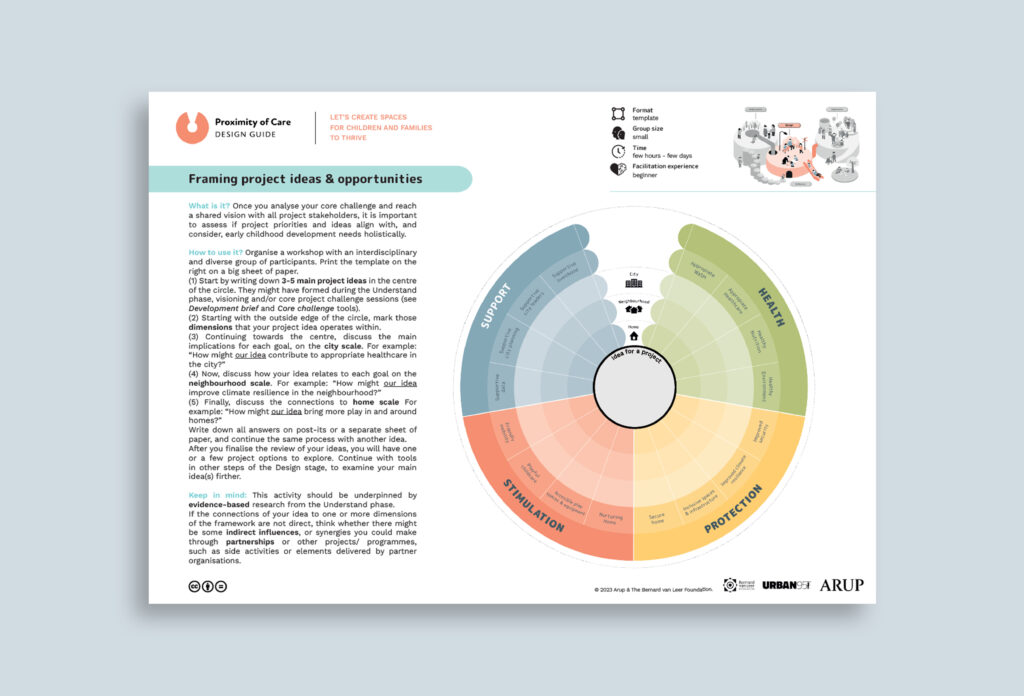
This tool can help you to assess if project proposal priorities and ideas align with, and consider, early childhood development needs holistically.
Core challenge
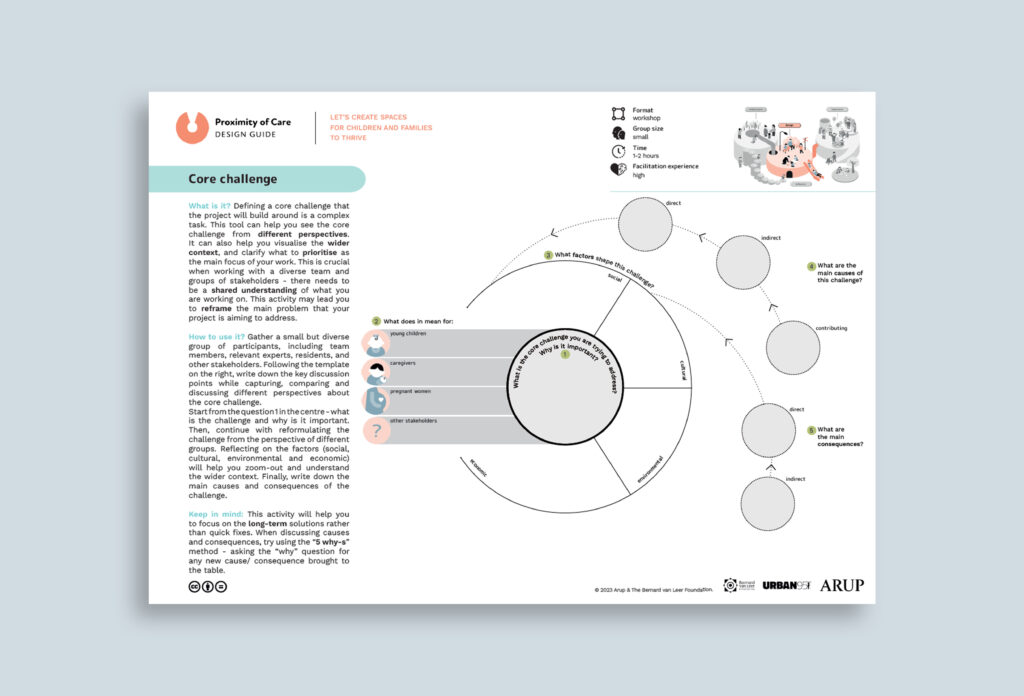
This tool can help you see the core challenge from different perspectives. It can also help you visualise the wider context, and clarify what to prioritise as the main focus of your work.
Developing a vision
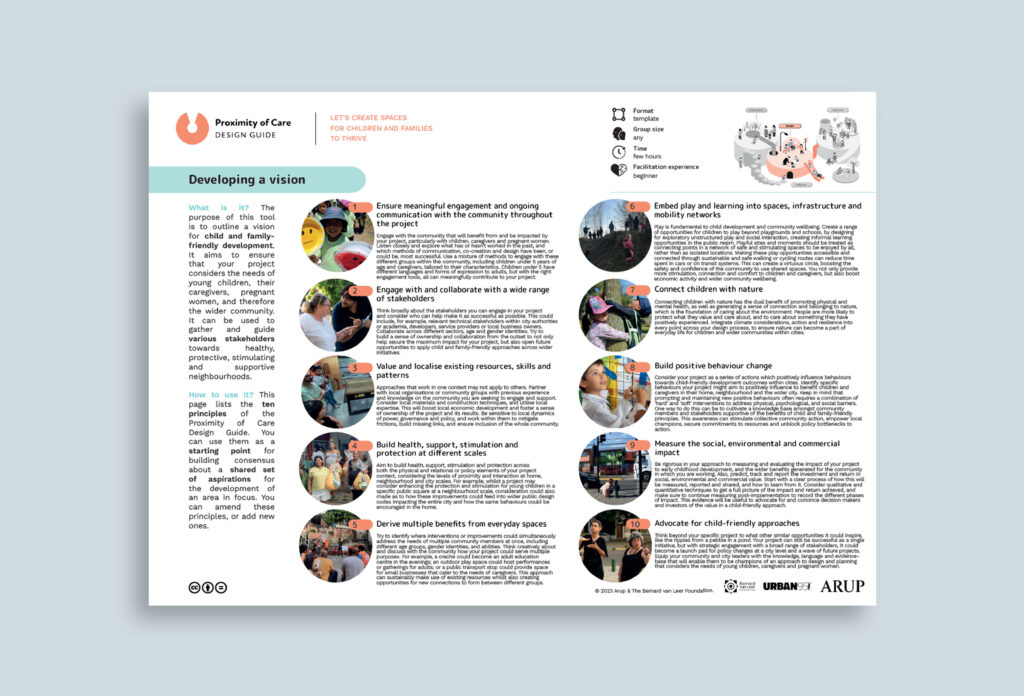
The purpose of this tool is to outline a vision for child and family-friendly development.
Theory of Change
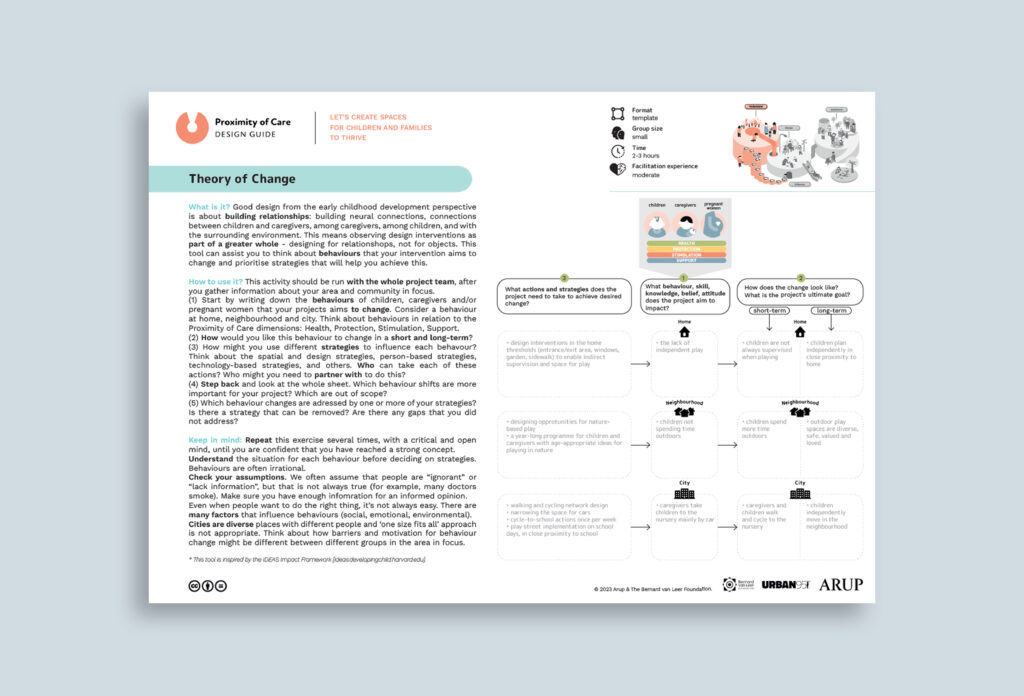
Theory of change template is designed to help you think about behaviours that you aim to change in a home, neighbourhood or city, and in relation to the Proximity of Care Framework. This activity can be done within the project team, or with stakeholder groups you are working with.
Measuring: what and how?
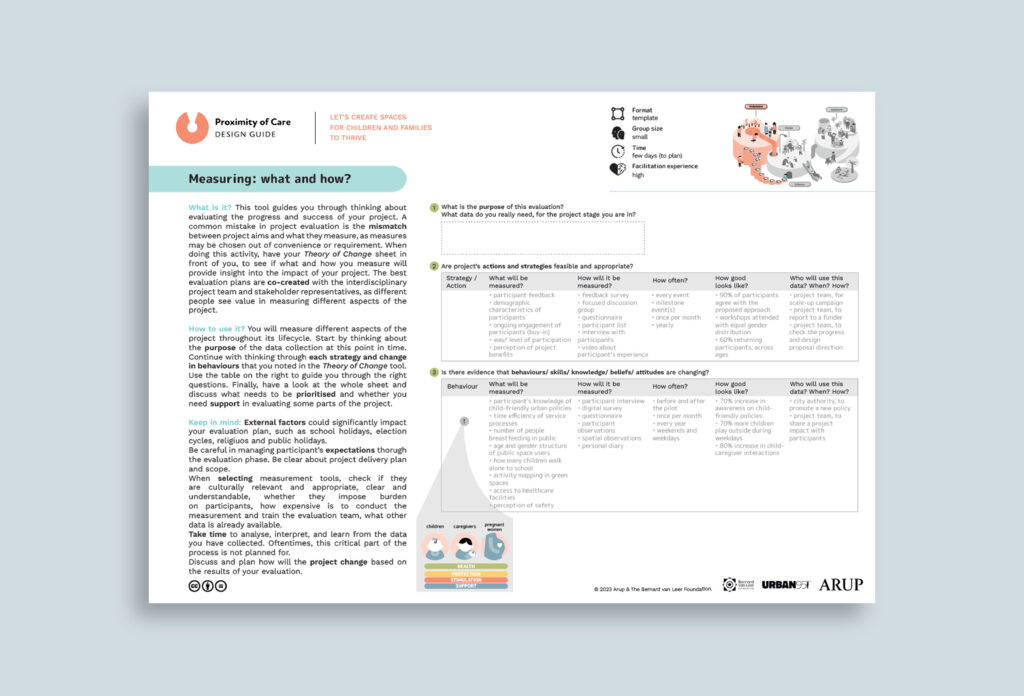
This tool guides you through thinking about evaluating the progress and success of your project.
Transforming a schoolyard into a green oasis
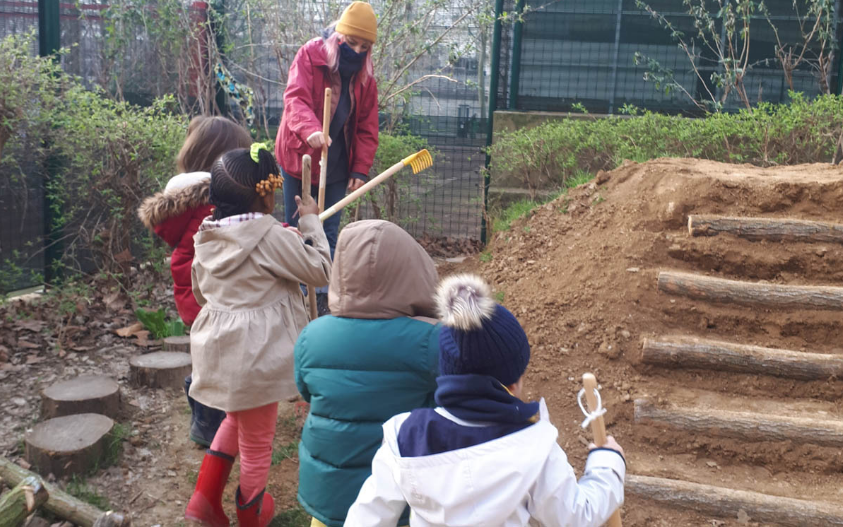
Overview The OASIS programme transforms Parisian schoolyards into green oases accessible to both pupils and local communities. Educational gardens teach children about nature and gardening, while also providing shade and storm-water management. The project worked with 10 schools from 2019 to 2021, involving pupils, teachers, parents and other stakeholders in the transformation process. The aim […]
Profile Report template
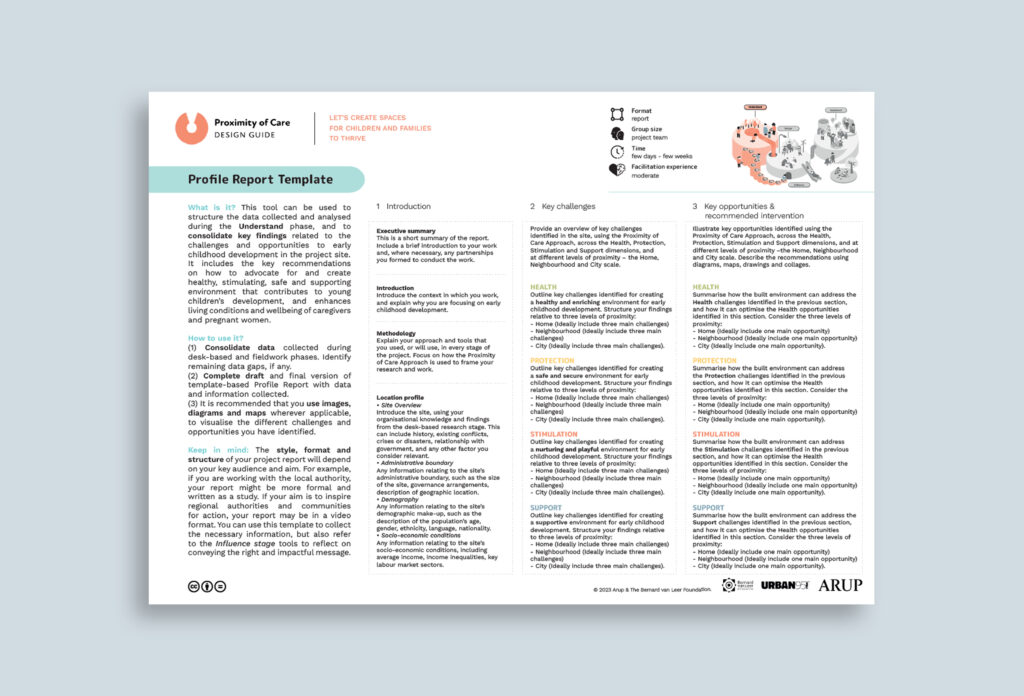
This tool can be used to structure the data collected and analysed during the Understand phase, and to consolidate key findings related to the challenges and opportunities to early childhood development in the project site.
Transforming traffic-heavy Streets into safe spaces for children
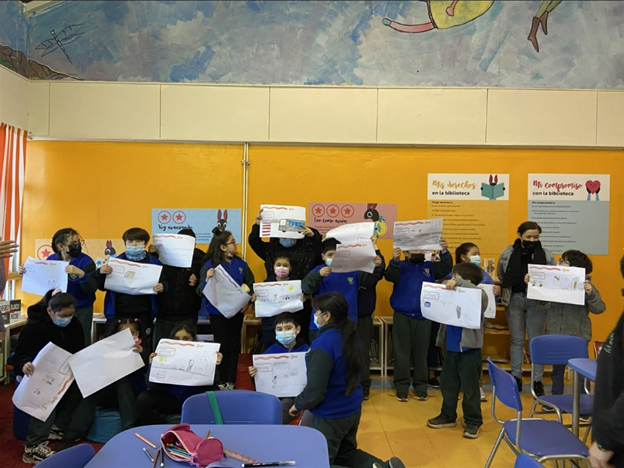
Overview Location:Validivia, Chile Organisation:Ciudad Emergente Partner organisations:City of Validivia Year:2022 Scale of proximity:Neighbourhood Target beneficiaries:Children 0-5; Caregivers Building safer and more supportive spaces for children How can we reimagine crowded and car-filled streets as safe and supportive spaces for children? This is the question we set out to address in our project Valdivia Neighbourhood of […]
Care map
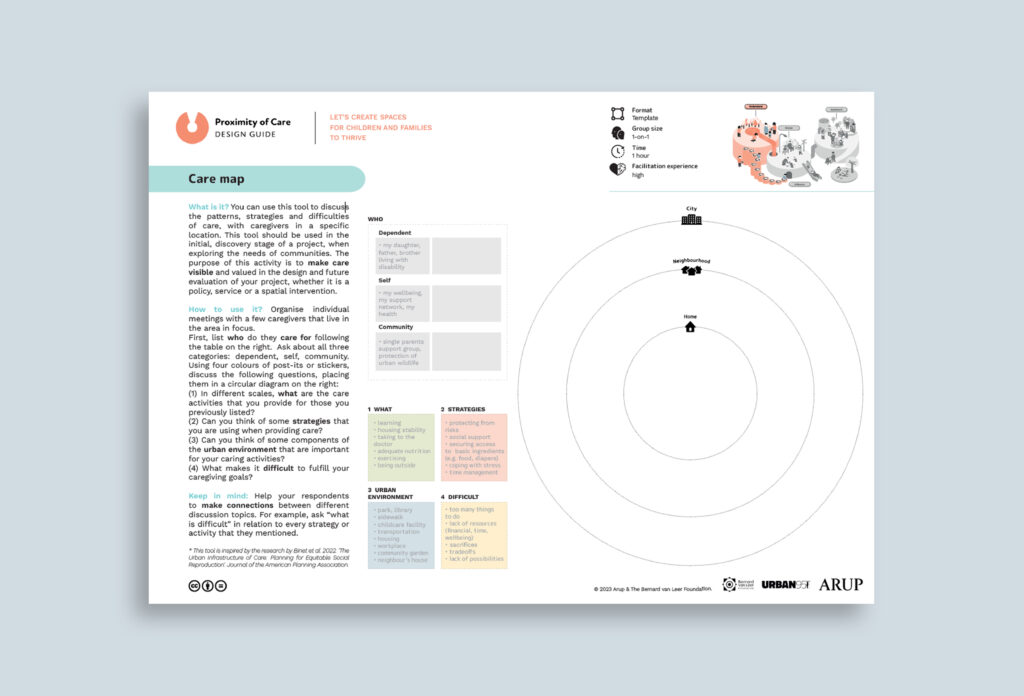
You can use this tool to discuss the patterns, strategies and difficulties of care, with caregivers in a specific location. This tool should be used in the initial, discovery stage of a project.
Transforming neglected spaces through playful design
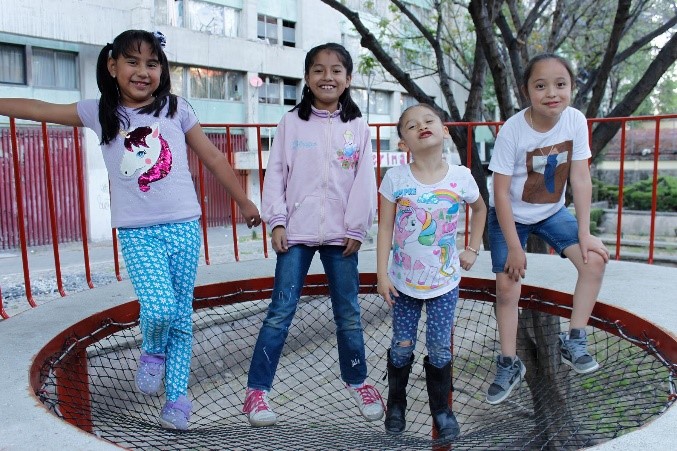
Overview Tamaulipas is a permanent urban installation that encourages play between generations. The garden-like site had a negative reputation, with poor lighting and maintenance and drug use. Insecurity of the neighbours and visitors drove them away or forcing them to take longer routes to the kindergarten, primary school, and two nearby apartment buildings. The intervention […]
Personal diary
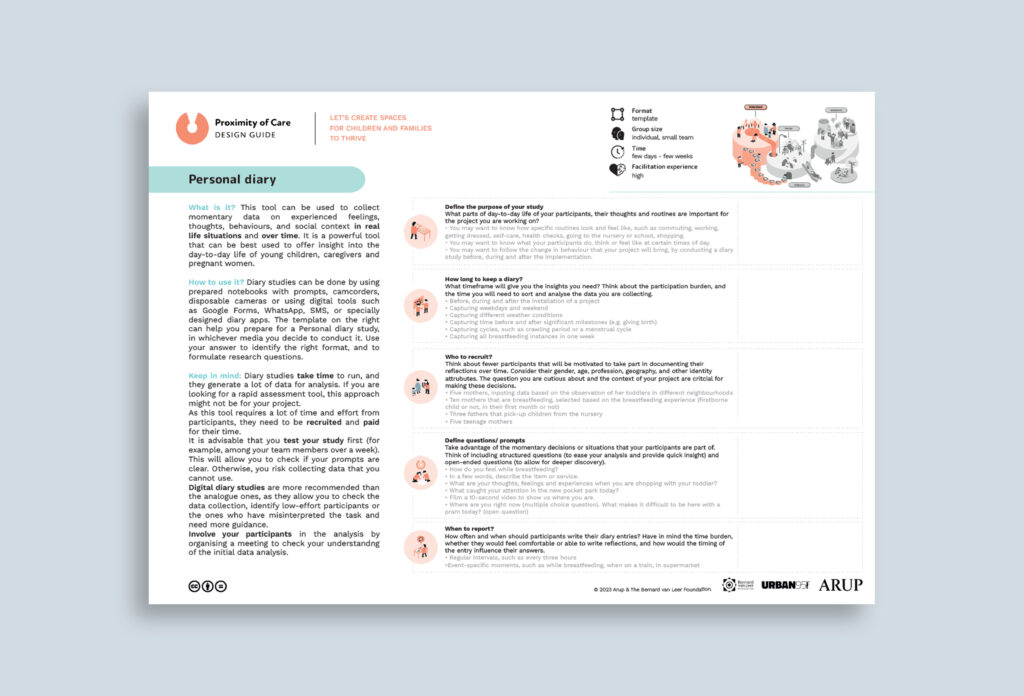
Personal diary is a personal reflection activity that can provide insights into the experiences of young children, caregivers and pregnant women in the everyday life in their home, neighbourhood or city.
Transforming negative spaces for vulnerable children
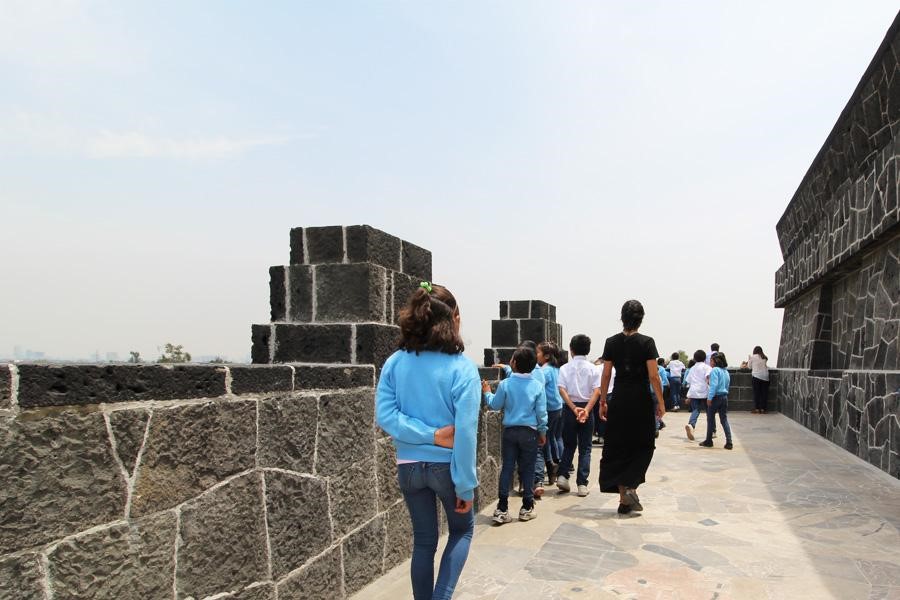
Overview The action-research project ‘Spatial Impressions: Identity, Shelter, and Awareness’ aims to promote resilience and reframe the realities of vulnerable children who have been subjected to violence. The project explores how architecture can transform negative connotations into positive experiences through spatial perception, play, and exploration. It seeks to understand how children perceive and conceive places […]
The city through a young girl’s eyes
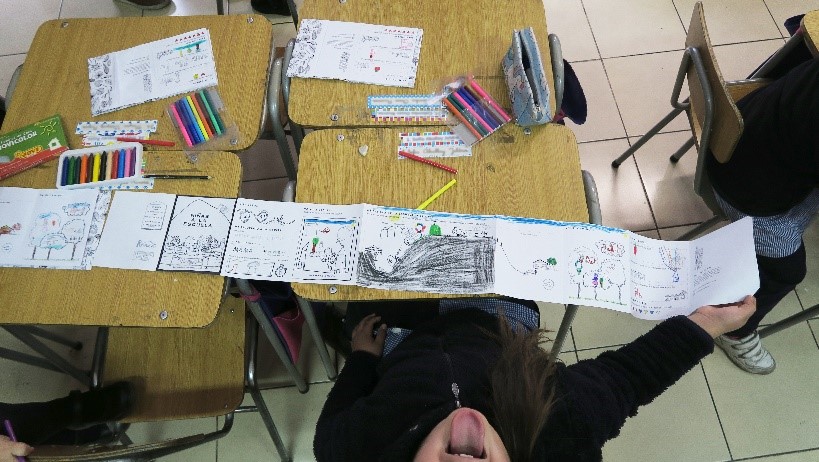
Overview Niñas a la Escuela (Girls to School) is an initiative that aims to make girls’ points of view more visible in urban design projects related to mobility and public spaces. The approach focuses on learning about girls’ experiences of their daily journey to school and their walking routes through their neighbourhood, which is recorded […]
Consent forms
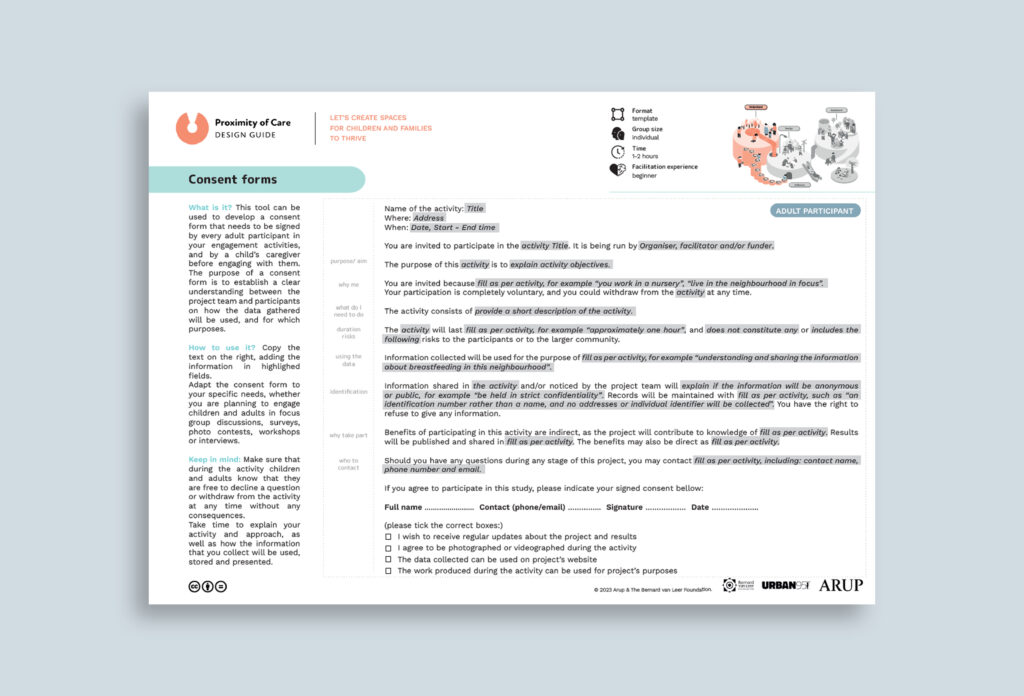
Consent forms is a template that you could directly adapt to use in your project. It is also a reflection on the ethical practice in your assessment and design, and different aspects of projects that could impose ethical risk to participants.
Assessment workshop
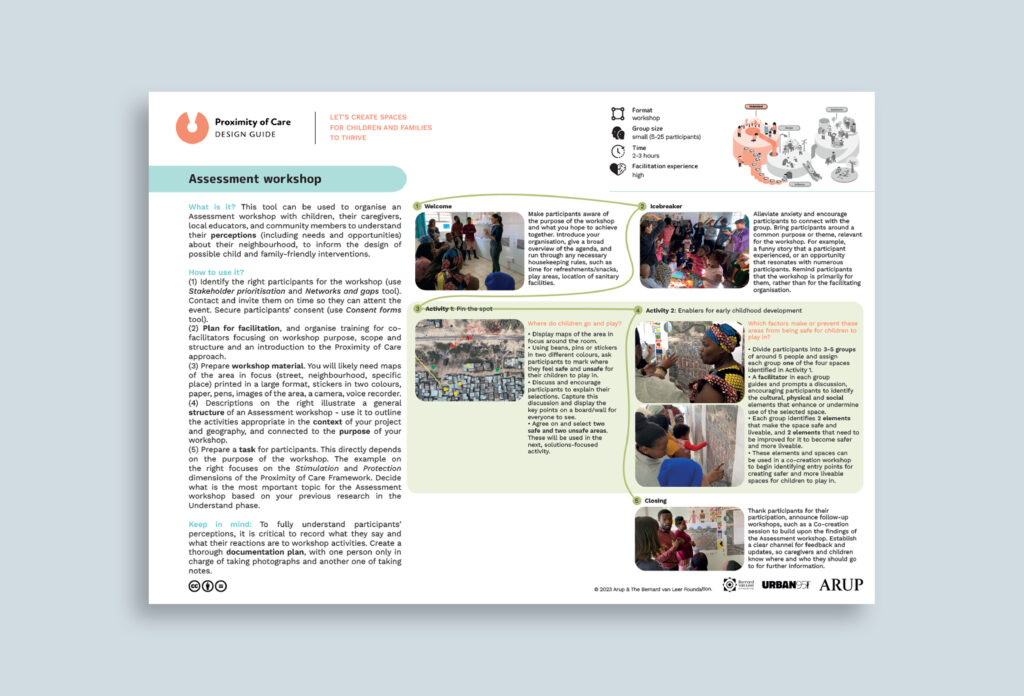
Assessment workshop can be used to organise an assessment workshop with children, their caregivers, local educators, and community members to understand their perceptions (including needs and opportunities) about their neighbourhood. It offers a few activities that you could explore and adapt to your project.